
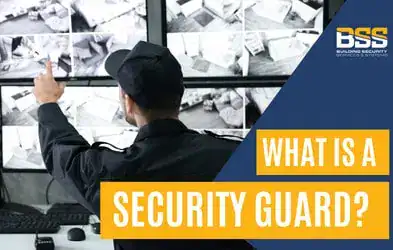
Security guards are trained professionals responsible for protecting people, property, and assets from threats including theft, vandalism, and violence. In 2024, the security guard industry employed over 1.27 million workers in the United States, according to the Bureau of Labor Statistics, making it one of the largest segments of the private security sector.
Whether stationed at a commercial office building, shopping mall, construction site, or residential property, security guards serve as the first line of defense against criminal activity and emergency situations.
What Does a Security Guard Do?
Security guards perform a wide range of duties depending on their assignment, but their core responsibilities center on three areas: deterrence, detection, and response.
Visible Deterrence
The mere presence of a uniformed security guard significantly reduces criminal activity. A randomized controlled trial published in PLOS ONE found that directed patrol by uniformed security agents reduced reported crimes at target locations, confirming that visible security presence is a powerful deterrent (Ariel et al., 2016).
For businesses in high-traffic areas like Manhattan or Jersey City, this visible presence creates a sense of safety for employees, customers, and residents.
“Security is about more than responding to incidents – it’s about preventing them. A well-trained officer who knows your building and your tenants creates a deterrent that no camera can replicate.” – Amanda DeAlmeida, Executive Vice President, Building Security Services
Patrol and Surveillance
Security guards conduct regular patrols of their assigned areas, checking:
- Entry and exit points (doors, windows, gates)
- Parking structures and perimeters
- Sensitive areas (server rooms, executive floors, storage)
- CCTV monitors and alarm systems
Modern security guards often use technology including access control systems, surveillance cameras, and incident reporting software.
Learn more: Security Guard Tools & Equipment List
Emergency Response
Security guards are typically first responders when incidents occur. They’re trained to:
- Assess and contain emergency situations
- Contact appropriate emergency services (police, fire, EMS)
- Administer basic first aid and CPR
- Evacuate buildings safely during fires or threats
- Document incidents for insurance and legal purposes
Related: What Are the Duties & Responsibilities of Security Officers?
Access Control
Many security guards manage who enters and exits a facility by:
- Verifying credentials and identification
- Issuing visitor badges
- Maintaining sign-in logs
- Screening bags and packages
- Operating metal detectors (at high-security sites)
Conflict Resolution
De-escalation is a critical skill. Security guards are trained to diffuse tense situations using verbal techniques before they escalate to physical confrontations. This includes handling:
- Disgruntled customers or tenants
- Trespassers
- Intoxicated individuals
- Disputes between parties
Learn more about effective communication skills for security guards.
Types of Security Guards
Not all security positions are the same. Here are the main categories:
Unarmed Security Guards
The most common type, unarmed guards rely on observation, communication, and de-escalation. They’re appropriate for:
- Office buildings
- Retail stores
- Residential properties
- Schools and universities
- Hospitals and healthcare facilities
Learn about BSS unarmed security services →
Armed Security Guards
Armed guards carry firearms and undergo additional training and licensing. They’re used in higher-risk environments:
- Banks and financial institutions
- Jewelry stores
- Government buildings
- High-value cargo transport
- Executive protection
Learn about BSS armed security services →
Security Concierge
A hybrid role combining security functions with front-desk hospitality. Common in:
- Luxury residential buildings
- Class A office buildings
- High-end hotels
Learn about BSS concierge and doorman services →
Mobile Patrol Officers
Rather than staying at one location, mobile patrol officers cover multiple sites, conducting periodic checks. This is cost-effective for:
- Construction sites (after hours)
- Parking lots
- Multi-property management companies
Learn about BSS patrol services →
Event Security
Specialized guards for concerts, sporting events, corporate gatherings, and private parties. They handle crowd control, credential verification, and emergency response.
Learn about BSS event security services →
For a deeper dive, see our complete guide to the types of security guards.
Security Guard Requirements and Training
Licensing Requirements
Requirements vary by state. In New York, security guards must:
- Be at least 18 years old
- Complete an 8-hour pre-assignment training course
- Pass a background check
- Obtain a Security Guard Registration Card from the NYS Division of Licensing Services
- Complete 16 hours of on-the-job training within 90 days
- Complete 8 hours of annual training thereafter
Detailed guide: How to Get a New York State Security Guard License
Key Skills and Qualifications
Effective security guards possess:
- Observation skills — Noticing details others miss
- Communication — Clear verbal and written reporting
- Physical fitness — Ability to stand, walk, and respond physically
- Judgment — Knowing when to intervene vs. call for backup
- Integrity — Trustworthiness with access to sensitive areas
- Customer service — Professional interaction with the public
Related: Skills and Qualities of Security Officers
“We hire for character and train for skill. You can teach someone how to operate an access control system, but you can’t teach integrity or a genuine desire to protect people.” – Susan Ferdinando, President, Building Security Services
Security Guard Salary in 2026
National Averages
According to the Bureau of Labor Statistics (2024 data):
- Median hourly wage: $18.46/hour
- Median annual salary: $38,390
- Top 10% earn: Over $53,000/year
NYC and New Jersey Pay Rates
Security guards in the New York metro area earn significantly more due to higher cost of living and stronger regulations:
- NYC average: $19–$26/hour for unarmed guards
- Armed guards: $22–$35/hour
- Supervisors: $28–$45/hour
New in 2026: The NYC City Council passed the Aland Etienne Safety and Security Act, requiring private security employers to meet wage and benefit standards comparable to those on city contracts. This landmark legislation, which overcame a mayoral veto on January 29, 2026, will raise compensation standards across the industry (The New York Times).
For current pricing information: How Much Does It Cost to Hire a Security Guard?
Security Guard Industry Outlook
The security services industry continues to evolve. Key trends for 2026:
Job Openings
The BLS projects 162,300 annual job openings for security guards through 2034, driven by:
- Retirements and turnover
- Increased demand for building security post-pandemic
- Growing construction activity (especially in NYC/NJ)
- Rising concerns about workplace violence
Read more about security guard industry trends.
Technology Integration
Modern security guards work alongside technology:
- AI-powered surveillance systems
- Mobile incident reporting apps
- Access control integration
- Real-time communication platforms
However, technology augments rather than replaces human guards. The judgment, customer service, and physical response capabilities of trained personnel remain irreplaceable.
Industry Consolidation
The security industry is consolidating, with larger companies acquiring smaller firms. This makes established, independent providers like family-owned companies increasingly valuable for clients seeking personalized service and accountability.
How to Choose a Security Guard Company
When selecting a security provider, evaluate:
- Experience — How long have they been in business?
- Licensing — Are they properly licensed and insured?
- Training programs — Do they exceed state minimums?
- Supervision — How do they manage and support their guards?
- Communication — Is management accessible 24/7?
- References — Can they provide client testimonials?
- Custom approach — Do they create tailored post orders?
Related: How to Evaluate a Security Company | Understanding Security Guard Contracts
Frequently Asked Questions
What’s the difference between a security guard and a security officer?
The terms are often used interchangeably. “Security officer” sometimes implies additional training, supervisory responsibilities, or armed status, but there’s no universal distinction. What matters is the specific training, licensing, and duties of the individual. Read more: Security Guard vs. Security Officer
Do security guards have the authority to arrest people?
Security guards can make “citizen’s arrests” in most states when they witness a crime being committed. However, their primary role is to observe, report, and deter—not to act as law enforcement. Guards are trained to contact police for criminal matters. Learn more: Can Security Guards Detain You?
Can security guards carry weapons?
Only armed security guards with proper licensing can carry firearms. In New York, this requires a special armed guard license with additional training and background checks. Most commercial security positions use unarmed guards. See: Unarmed vs. Armed Security Guards
How is a security guard different from police?
Police are government employees with full law enforcement powers including arrest authority, investigation rights, and use of force authorization. Security guards are private employees focused on protecting specific properties or people. They work with law enforcement but are not substitutes for it.
What should I look for when hiring security guards for my building?
Key factors: proper licensing, relevant experience (commercial, residential, retail), adequate training, 24/7 management availability, custom post orders for your specific needs, and clear communication protocols.
Ready to Discuss Your Security Needs?
Security guards are essential professionals who protect our businesses, homes, and public spaces. From unarmed lobby attendants to armed patrol officers, they provide the human element that technology alone cannot replicate: judgment, customer service, and immediate physical response.
In the New York and New Jersey metro area, where Building Security Services has operated for over 40 years, the demand for professional security continues to grow. With new legislation like NYC’s Aland Etienne Act raising industry standards, quality security providers who invest in their guards will deliver even greater value to clients.
Whether you need security for a Manhattan office building, Newark warehouse, or Brooklyn residential property, understanding what security guards do—and what to look for in a provider—is the first step toward protecting what matters most.
Contact Building Security Services
- Phone: (973) 414-1111 (NJ) | (212) 687-1711 (NYC)
- Email: info@buildingsecurity.com
Sources & References
- U.S. Bureau of Labor Statistics — Occupational Outlook Handbook: Security Guards and Gambling Surveillance Officers (2024 data)
- Ariel, B., Bland, M., & Sutherland, A. (2017). “Lowering the threshold of effective deterrence—Testing the effect of private security agents in public spaces on crime.” PLOS ONE. PMC5718484
- NYS Department of State — Security Guard Registration
- The New York Times — “Adams’s Parting Gift of 19 Vetoes Is Being Returned, With 17 Overrides” (January 29, 2026)


